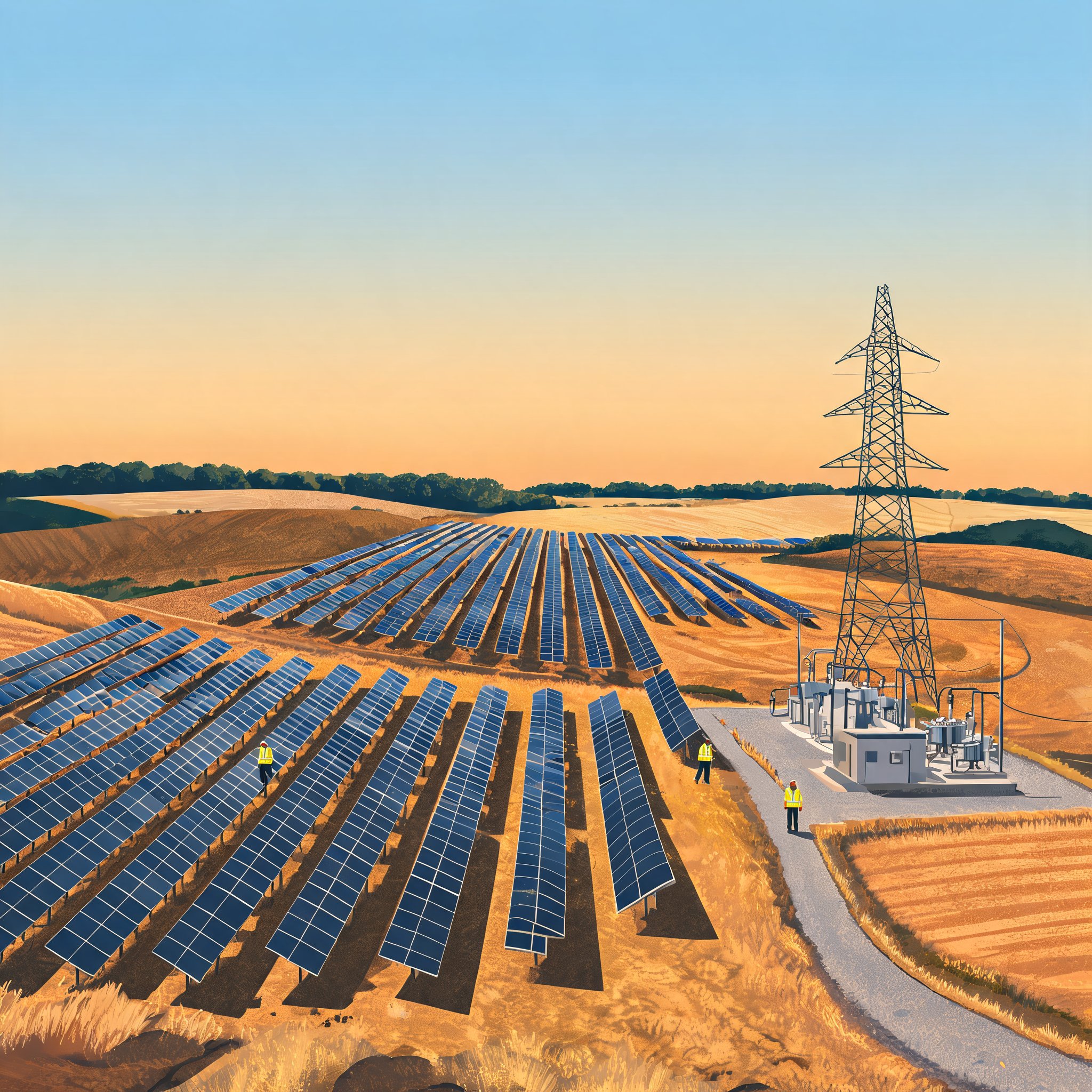
DTE Energy has announced plans to add as much as 150 megawatts of new solar generation in Michigan, a move the company says would create construction jobs, support host communities and reduce fuel costs for customers.
Because solar plants do not burn fuel, DTE said the projects would also limit its exposure to fuel-price swings over their operating lives and support its push to supply power that is reliable, increasingly clean and affordable. The company cast the spending as an investment in Michigan: generating more energy in-state without buying fuel can help lower customer costs and cut reliance on fuel brought in from outside Michigan. DTE added that the projects would bring construction work, new investment and tax revenue to local communities, providing more resources for schools, first responders and the services families depend on. The announcement describes a planned procurement rather than completed construction.
Competitive solicitation and deadlines
DTE is seeking competitive proposals for up to 150 megawatts of Michigan-based solar. The procurement supports requirements in the settlement agreement for Michigan Public Service Commission Case No. U-21662, which was approved on May 15, 2025.
Qualifying projects must reach commercial operation by June 30, 2030, be located in Michigan and interconnect either to the MISO transmission system or to DTE's distribution system, according to the company. Interested bidders can register through PowerAdvocate for additional information. Proposals are due Jan. 19, 2027, and DTE expects to sign contracts in the second or third quarter of 2027.
Because the solicitation is competitive, the final capacity, siting and pricing will depend on the bids DTE receives and the contracts it executes, and the 150-megawatt figure is a ceiling rather than a completed addition to the company's fleet. The mid-2030 operation deadline also means projects selected in this round would not begin delivering power before the end of the decade.
Existing renewable capacity
DTE describes itself as a producer of and investor in renewable energy in Michigan, with enough wind and solar generation to power nearly one million homes. The company said it remains committed to growing its renewable portfolio while maintaining a balanced mix of resources that supports reliability and affordability as it works toward net-zero carbon emissions.
Its 2026 Integrated Resource Plan builds on that commitment and calls for an additional 15 gigawatts of renewable energy by 2042, according to the company, a target far larger than the 150 megawatts sought in this solicitation.