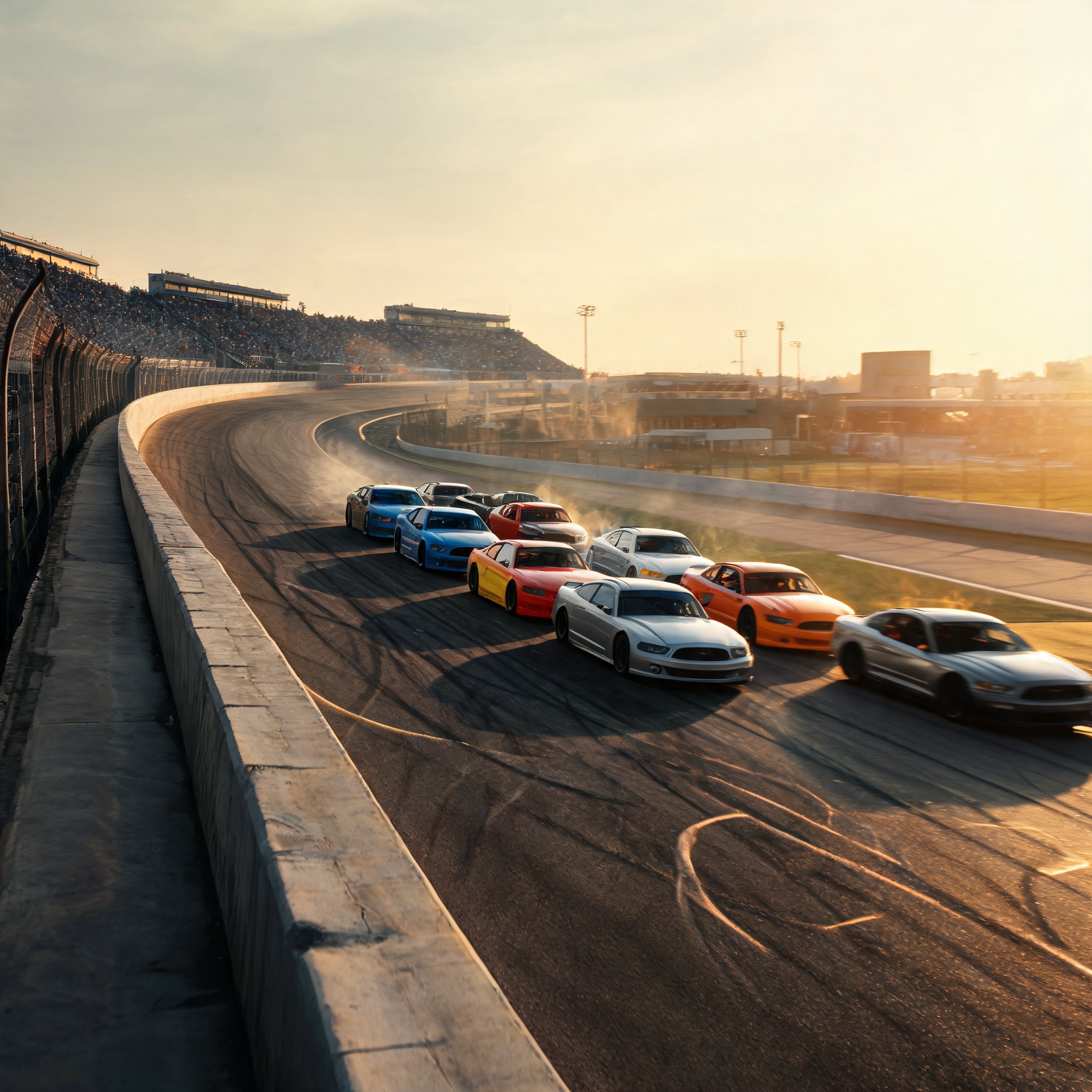
NASCAR Classics has added a widescreen HD installment to its growing archive of race footage, revisiting the 2001 EA Sports 500 at Talladega. The video is part of the channel's Sights & Sounds series, which uses trackside camera clips without commentary or narration instead of reposting a traditional broadcast. The result is a more intimate, home-movie-style view of a Cup Series race from a season shaped by the death of Dale Earnhardt Sr.
The NASCAR Classics YouTube channel already offers clips and full races spanning nearly all of the series' 78-year history. The Sights & Sounds releases represent a recent change in approach. By using widescreen HD footage and stripping away announcers, the videos put viewers closer to the cars, the track and the crowd. The picture quality is higher than most people would have seen on early 2000s televisions, and the absence of a broadcast narrative gives the race a different texture.
The 2001 season is now 25 years in the past. It began with tragedy when Dale Earnhardt Sr. was killed in a crash in the final corner of the Daytona 500, just as Michael Waltrip and Dale Earnhardt Jr. secured a 1-2 finish for Earnhardt's own Dale Earnhardt Inc. team. Earnhardt Jr. naturally became the focal point of the rest of the season. In the Talladega race featured in the new video, trackside audio captures plenty of cheering as he wins.
That Talladega victory was one of several emotional wins for Earnhardt Jr. in 2001. He won the Pepsi 400, the first race at Daytona after his father's death, and also won the first race after the September 11 terrorist attacks, held at Dover. Jeff Gordon was ultimately crowned champion, a result that reflects how competitive the Cup Series was that year. The EA Sports 500 field also included memorable names such as Tony Stewart and Mark Martin, who was then 42 and drove a Viagra-sponsored Ford.
The cars sounded strong, raced well and carried memorable sponsor liveries. NASCAR was more or less at the peak of its popularity in the early 2000s. The series had become more commercialized than in its romanticized early days of bootleggers and shade-tree mechanics, but it had found a formula that worked. The new video is presented as a way to revisit that period with clearer images and raw track sound, and as a palate cleanser for viewers who want to hear engines instead of analysis.