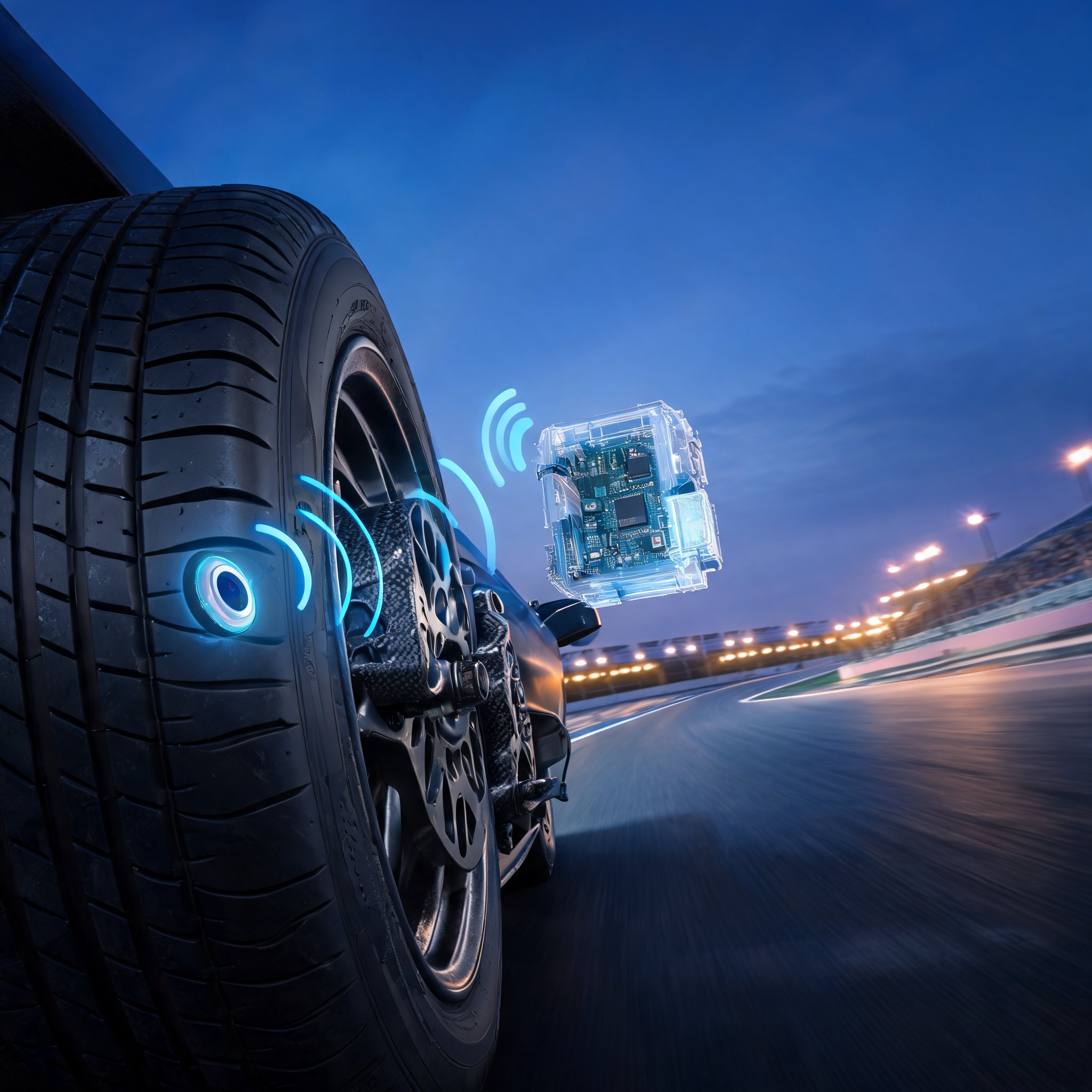
Pirelli is bringing its Cyber Tyre technology to the United States, turning the tire into an intelligent system that collects data and communicates in real time with a vehicle’s electronic systems. The company demonstrated the technology at Las Vegas Motor Speedway during the Formula 1 Las Vegas Grand Prix, with Executive Chairman Marco Tronchetti Provera, CEO Andrea Casaluci, Chief Technology Officer Piero Misani and North America CEO Claudio Zanardo on hand. Italian Ambassador to the United States Marco Peronaci also attended. Pirelli has been the championship’s exclusive Global Tyre Partner since 2011. The demonstrations covered applications including ABS braking and traction control.
U.S. rollout and plant expansion
The U.S. development follows Pirelli’s September announcement of a multi-year investment plan of approximately $1.2 billion in the United States. The investment will fund expansion of the company’s Rome, Georgia, facility, where tires equipped with Cyber Tyre technology will also be manufactured. The program is set to begin in 2027 and gradually increase the plant’s production capacity to approximately 6 million car tires annually by 2033, while creating about 1,000 new jobs. The expansion includes upgrades to Pirelli’s MIRS robotic manufacturing technology and a new, fully automated conventional production line for premium tires. Pirelli said the investments will strengthen Rome’s role as a technology hub serving the United States, which it describes as the world’s largest High Value market, and support its local-for-local strategy.
How Cyber Tyre works
Cyber Tyre is designed to make the tire an active source of information. A sensor inside the tread collects data including tire identification, pressure, temperature and acceleration. That information is transmitted via Bluetooth and processed in real time using Pirelli’s proprietary software and algorithms, allowing the tire to interact with vehicle electronics. Pirelli identifies two main application areas. In-vehicle integration can support electronic control systems and advanced driver assistance systems with information generated by the tire-road interaction, including early detection of aquaplaning risk. The second is road infrastructure monitoring, in which tire-collected data can help identify potential road hazards and support maintenance planning. Pirelli expects this role to grow as autonomous driving technology evolves, describing the tire as the vehicle’s only point of contact with the road and the resulting information as a “sense of touch.”
Demonstrations and first OE application
During the on-track demonstration, Pirelli showed how data collected directly from the tire, processed by its algorithms and translated into specific functions, can help vehicle control systems operate more effectively. For traction control, Cyber Tyre communicates the tire’s identification to the vehicle’s control unit, allowing the system to adapt settings to the characteristics of the tire installed. For ABS braking, the technology provides data on the tire’s point of maximum grip, helping reduce braking distances. Pirelli said integration with vehicle electronics is further enhanced through its collaboration with Bosch, with tire-collected information able to communicate directly with systems such as ABS, ESP and traction control.
The Pagani Utopia Roadster was another highlight. According to Pirelli, it is the first vehicle in the world to feature Cyber Tyre as standard original equipment, with the technology communicating directly with the vehicle’s electronic systems. Each tire is equipped with Cyber Tyre technology and a sensor that transmits information to onboard systems. Software integration allows the vehicle to use specific calibrations based on the tire installed and to adjust torque management according to tire type and temperature. As a result, the vehicle’s control systems can adapt their operating strategies to the tires actually fitted, while the driver receives dedicated information through the infotainment system.